
About the campaign
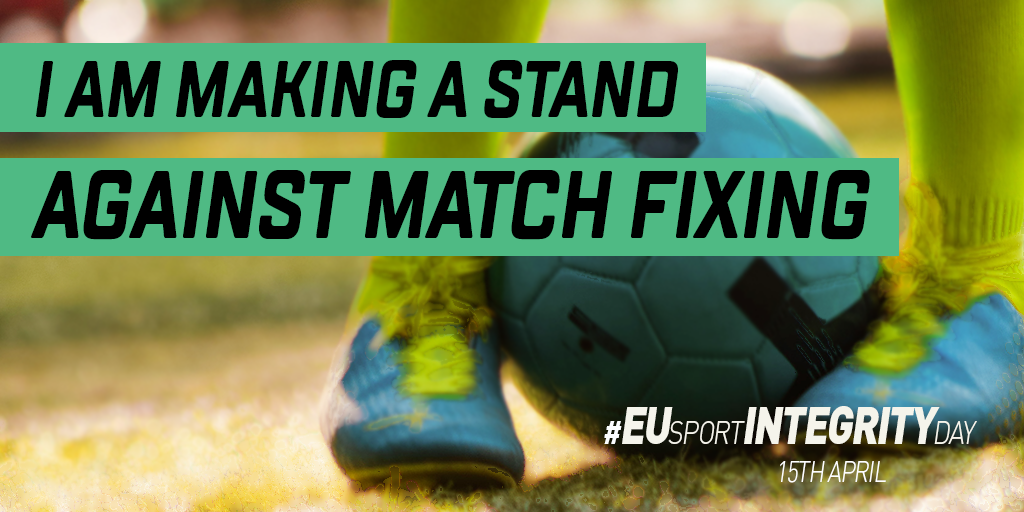
On the 15th of April every year, #EUSportIntegrityDay is an opportunity to show your commitment to fighting against match-fixing.
Match-fixing is widely recognized as a major threat for today’s sport, undermining the integrity of the game. Because of organized crime involvement, it can put athletes and other individuals at serious danger. If not acted upon, it could destroy sports that we all love because of the loss of public faith that can be caused by corruption.
Nobody can solve this problem on its own. All stakeholders: public authorities, sports organizations, betting operators and regulators, athletes, coaches, referees, fans and all the other organizations and people who care about the integrity in sport must stand arm in arm to fight against match-fixing.
Make a stand against match-fixing, support #EUSportIntegrityDay
Support and share
Show your support, download one of the images below and post it on social media with the mention #EUSportIntegrityDay
Get in touch
If you want to know more or have any questions about the #EUSportIntegrityDay feel free to contact us
#EUSportIntegrityDay
(C) EU Athletes 2023